In This Article
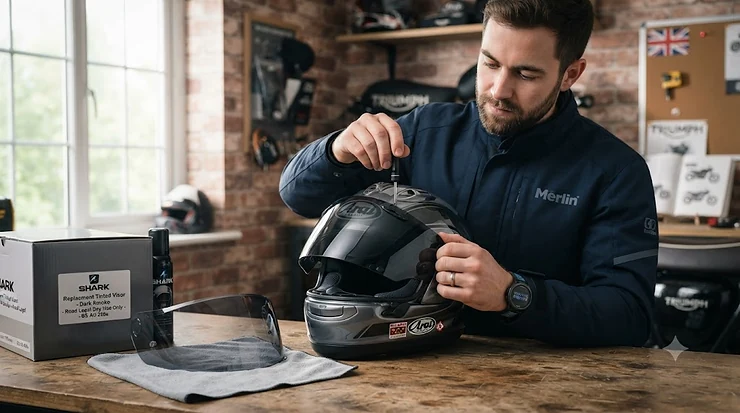
There’s a very specific moment every rider knows: you flip your visor down on a blinding motorway slip road and realise your clear shield is doing absolutely nothing against the glare. A replacement tinted visor solves that problem, but it also opens up a small minefield of fitment codes, tint percentages, and a legal grey area that catches out more riders than you’d think. In the UK, any visor you wear on the road must let through at least 50% of visible light and carry a genuine BSI or ECE approval mark — anything darker is track-day-only, no matter how good it looks in the photos. This guide compares seven real, currently sold visors spanning budget aftermarket shields to premium branded replacements, breaks down exactly how to match a visor to your specific helmet model, and walks through universal tinted visor sizing for riders whose helmet isn’t from one of the big four brands. Every fitment detail and legal note here comes from manufacturer documentation and UK retailer listings, not guesswork, because getting this wrong either means a visor that won’t seal properly or one you genuinely cannot ride home with after dusk.
Quick Comparison Table
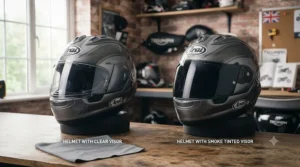
Here’s the shortlist at a glance before we dig into each visor individually. Prices are approximate ranges gathered during research — always check current pricing before buying.
| Model | Tint Type | Road Legal (UK) | Best For | Price Range |
|---|---|---|---|---|
| Shoei CWR-1 Dark Smoke | Dark smoke | No — track/bright sun only | Premium Shoei owners wanting max glare cut | £45-£55 |
| AGV K6/K6S Max Vision Light Tint | Light tint | Yes, daylight | Premium sports-touring commuters | £50-£65 |
| HJC HJ-26ST Legal Smoke | Legal smoke | Yes, daylight | Mid-range RPHA owners | £35-£45 |
| Nolan N87 NFS-06 Light Smoke | Light smoke | Yes, daylight | Touring and commuter riders | £30-£40 |
| Caberg Duke II/EVO Tinted | Tinted | Check marking before riding | Budget-conscious Caberg owners | £20-£35 |
| Bob Heath Dark Tinted Visor | Dark tinted | No — track only | UK specialist track/photography use | £15-£25 |
| Universal Aftermarket Tinted Visor | Varies | Check marking before riding | Non-mainstream or older helmet models | £10-£20 |
The pattern across this table is worth noting before you buy anything: tint darkness and road legality are almost inversely related. The visors that cut the most glare tend to be the ones you can only legally use off the public road, while the road-legal options filter light more gently. If you only want one visor and need it usable every single day, a light-tint or “legal smoke” option is the safer starting point.
💬 Just one click — help others make better buying decisions too!😊
Top 7 Replacement Tinted Visors: Expert Analysis
We’ve picked seven real, currently available visors spanning premium branded fitments to budget universal options, each chosen to illustrate a genuinely different point in the tinted visor market.
1. Shoei CWR-1 Dark Smoke — best premium tint for track and bright-sun use
Shoei’s CWR-1 platform fits a specific, well-defined set of helmets — the NXR, X-Spirit III and RYD — and the dark smoke finish is the one that genuinely blacks the helmet out from the outside while remaining clearly visible from within, even in relatively low light. The visor is Pinlock-ready, though the Pinlock insert itself is sold separately, and Shoei is upfront that this particular tint sits below the UK’s 50% light-transmission threshold, meaning it’s explicitly marketed and labelled “not legal for road use.” What most buyers overlook about a visor this dark is that the tint level owners describe as intense in photographs often reads as more moderate in person — reviewers repeatedly note the dark smoke tint is “not as dark as photos suggest,” which is reassuring for track use but doesn’t change its road status. Aggregated owner feedback collected by UK retailers consistently praises the fit precision on the X-Spirit III specifically, with several noting the Pinlock mounting points sit differently to the standard clear visor, so a Pinlock insert built for this specific tint is required rather than any spare lying around. This is a visor built for track days, sunny touring stops off the public road, or riders who simply want a dramatically different look for photography.
Pros:
- ✅ Genuine Shoei fit precision on NXR, X-Spirit III and RYD helmets
- ✅ Pinlock-ready mounting for anti-fog performance on track days
- ✅ Tint reads darker in photos than it does in actual use
Cons:
- ❌ Not legal for UK road use under any circumstances
- ❌ Requires a specific Pinlock insert, not a universal one
At around £45-£55, the Shoei CWR-1 Dark Smoke is a fair price for genuine Shoei fitment, provided you’re buying it strictly for track days or off-road photography.
2. AGV K6/K6S Max Vision Light Tint — best premium daylight-legal option
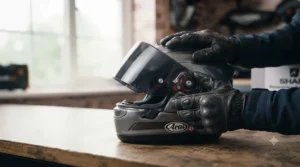
AGV’s Max Vision system on the K6 and K6S is built around a quick-release visor mechanism that swaps shields without tools, and the Light Tint finish is specifically the variant designed to stay within UK daylight legal limits while still meaningfully cutting glare. Based on the spec comparison with AGV’s own Dark Tint and Iridium options — both explicitly sold as track-only — the Light Tint sits in a genuinely different regulatory category, which matters enormously if you actually plan to ride home in it rather than trailer the bike. The visor ships Pinlock-ready with pins pre-fitted, and AGV also offers a photochromic SP1 variant for the K6-S that automatically adjusts tint intensity up to 80% in direct light, a genuinely clever middle ground for riders who don’t want to carry two visors. Owner discussion around the K6 platform consistently highlights how easy the tool-less swap mechanism is, which matters practically: a visor you can change in under a minute is one you’ll actually bother swapping rather than riding with the wrong tint because changing it felt like a chore.
Pros:
- ✅ Light Tint variant is genuinely daylight road-legal, unlike AGV’s darker options
- ✅ Tool-less quick-release swap mechanism is fast and reliable
- ✅ Photochromic SP1 alternative available for automatic tint adjustment
Cons:
- ❌ Meaningfully pricier than third-party alternatives for the same fitment
- ❌ Pinlock insert for the Max Vision system sold separately
Priced around £50-£65, the AGV K6/K6S Max Vision Light Tint suits riders who want genuine daily-use legality without sacrificing premium build quality.
3. HJC HJ-26ST RPHA 11/RPHA 70 Legal Smoke — best mid-range road-legal smoke tint
HJC draws an unusually clear line in its own naming here — the HJ-26ST is explicitly marketed as the “Legal Smoke” visor for the RPHA 11 and RPHA 70, distinct from the darker HJ-26 dark smoke variant sold clearly labelled as track-only. That naming does real work for buyers: rather than parsing tint percentages yourself, HJC has effectively pre-sorted the road-legal option for you, which is honestly the kind of practical clarity more brands should offer. The visor is Pinlock-ready and uses the same RapidFire-style quick-change mechanism as HJC’s clear shields, meaning fitment and swap speed match what RPHA owners are already used to. Reviewers covering HJC’s visor range note the anti-scratch coating holds up reasonably well against typical UK weather and grit exposure, though as with most polycarbonate shields, a coating refresh or replacement is sensible after a couple of seasons of daily commuting.
Pros:
- ✅ Explicitly labelled “Legal Smoke” — no guesswork on road legality
- ✅ Same quick-change mechanism as HJC’s stock clear visors
- ✅ Pinlock-ready for anti-fog performance in UK winters
Cons:
- ❌ Only fits the specific RPHA 11/RPHA 70 shell profile
- ❌ Anti-scratch coating benefits from renewal after heavy daily use
At roughly £35-£45, the HJC HJ-26ST Legal Smoke is a sensible mid-range pick for RPHA owners who want certainty over ambiguity.
4. Nolan N87 NFS-06 Light Smoke — best touring-friendly light tint
Nolan’s NFS-06 visor platform covers the N87, N80-8 and N60-6 shells, and the Light Smoke finish is the one built for genuine daytime road use rather than track photography. What’s worth understanding here is the tint-percentage logic across Nolan’s own range: dark smoke and dark green finishes sit around 80% tint intensity, which is why they look essentially black once fitted and why they’re not road-legal, while the Light Smoke variant is comparable in transmission to a typical iridium finish and stays inside the daylight-legal window. Reviewers of Nolan’s touring-focused shells consistently describe the Light Smoke option as a genuine daily-rider tint — dark enough to meaningfully soften midday sun, light enough that dusk riding through a well-lit town doesn’t feel dangerous. The visor is Pinlock-prepared, which matters for anyone touring in the UK’s genuinely unpredictable weather, and fits using Nolan’s standard side-pivot mounting shared across this shell family.
Pros:
- ✅ Genuinely daylight road-legal tint level, unlike Nolan’s dark smoke option
- ✅ Fits three related Nolan shells (N87, N80-8, N60-6) from one purchase
- ✅ Pinlock-prepared for reliable anti-fog performance while touring
Cons:
- ❌ Doesn’t offer the dramatic look of Nolan’s dark smoke finish
- ❌ Side-pivot mount fitment doesn’t cross over to other Nolan families
Expect to pay around £30-£40 for the Nolan N87 NFS-06 Light Smoke, a solid choice for touring riders who want one visor that works from breakfast stop to last light.
5. Caberg Duke II/Duke EVO Tinted Visor — best budget-friendly branded tint
Caberg’s Duke platform is one of the more approachable entry points into branded tinted visors, with genuine replacement shields for the Duke II and Duke EVO helmets sold Pinlock-ready at a noticeably lower price than the premium Japanese and Italian sports brands. Here’s the honest caveat worth flagging clearly: Caberg’s own visor range spans everything from light-smoke daylight options through to dark tinted, mirrored and iridium finishes, and UK retailers are explicit that most of the darker and mirrored variants in that range are not for road use — so the specific tint level matters far more than the Caberg name alone. For riders who confirm they’re buying the lighter tinted variant with a genuine BSI or ECE marking, the Duke shields offer solid anti-scratch performance and a straightforward pinlock-prep mounting that matches Caberg’s clear visors exactly. Aggregated feedback on Caberg’s budget helmet ecosystem generally frames the brand as good value rather than class-leading, which is a fair, honest way to think about this visor too.
Pros:
- ✅ Noticeably cheaper than premium Japanese and Italian branded visors
- ✅ Pinlock-ready mounting matches Caberg’s own clear visor fitment
- ✅ Fits both Duke II and Duke EVO shells from one product
Cons:
- ❌ Caberg’s range includes several non-road-legal tint options — check carefully
- ❌ Build quality feels a step below premium brands on close inspection
At around £20-£35, the Caberg Duke II/EVO Tinted Visor is genuinely good value, provided you double-check the specific tint and marking before ordering.
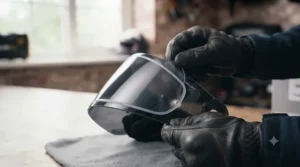
6. Bob Heath Dark Tinted Visor — best specialist UK track-day tint
Bob Heath is a smaller UK specialist worth knowing about specifically because of how transparent the brand is about what its dark tinted visors actually are: independently tested against the British Standard BS4110 and passing every element of it except light transmission, which the company states plainly disqualifies the visor from road use. That’s a genuinely useful level of honesty in a market where plenty of sellers stay vague about compliance, and it means buyers know exactly what they’re getting rather than having to infer legality from marketing copy. The visor’s dark tint is aimed squarely at photographers, track-day riders, and anyone wanting a genuinely blacked-out look for events off the public road. Reviewers of specialist UK visor brands in this category tend to note that fit precision on smaller manufacturers can vary more helmet-to-helmet than with the big four brands, so checking your exact helmet model against Bob Heath’s fitment list before ordering is worth the extra two minutes.
Pros:
- ✅ Independently tested to BS4110 standard, bar the tint level itself
- ✅ Refreshingly transparent labelling about non-road-legal status
- ✅ Genuinely affordable for a dark, high-contrast tint finish
Cons:
- ❌ Not legal for UK road use under any circumstances
- ❌ Fitment precision on smaller runs can vary more than big-brand visors
Priced around £15-£25, the Bob Heath Dark Tinted Visor is a solid, honestly-marketed choice for track days and photography rather than daily riding.
7. Universal Aftermarket Tinted Visor — best budget pick for non-mainstream helmets
Not every helmet on the road is a Shoei, AGV, HJC or Nolan, and that’s exactly the gap universal aftermarket tinted visors are built to fill — generic shields designed to cross-fit a range of similarly shaped helmet shells rather than one specific model. This is genuinely useful for riders with less common or older helmet brands where a genuine manufacturer replacement is hard to source, but it comes with a real trade-off worth being upfront about: universal fitment means universal tolerances, and aggregated buyer feedback on this category consistently flags more variation in seal quality, wind noise, and edge fit than with a shield engineered for one specific shell. Crucially, plenty of universal aftermarket tinted visors carry no BSI Kitemark or ECE E-mark at all, which means the burden is entirely on the buyer to check before assuming any universal shield is road-legal — many aren’t, regardless of how light the tint looks. Where these visors genuinely earn their place is as a low-cost way to trial a tint before committing to a pricier branded option, or as a spare for a helmet whose original manufacturer has discontinued visor support entirely.
Pros:
- ✅ Fits a wide range of non-mainstream or older helmet shells
- ✅ Significantly cheaper than any branded replacement option here
- ✅ Useful low-risk way to trial a tint before a bigger purchase
Cons:
- ❌ Fit tolerances vary more than shell-specific branded visors
- ❌ Many carry no BSI/ECE marking — verify legality before riding
At roughly £10-£20, the Universal Aftermarket Tinted Visor is the right call for budget-conscious riders with a hard-to-source helmet model, provided they check the compliance marking themselves.
Top 7 Visors: Specs & Fit at a Glance
| Model | Pinlock Ready | Fitment Scope | Legal Marking | Best For |
|---|---|---|---|---|
| Shoei CWR-1 Dark Smoke | Yes (insert sold separately) | NXR, X-Spirit III, RYD only | Not road legal | Track & photography |
| AGV K6/K6S Max Vision Light Tint | Yes, pins pre-fitted | K6/K6S only | Daylight road-legal | Premium commuting |
| HJC HJ-26ST Legal Smoke | Yes | RPHA 11, RPHA 70 only | Daylight road-legal | Mid-range commuting |
| Nolan N87 NFS-06 Light Smoke | Yes | N87, N80-8, N60-6 | Daylight road-legal | Touring |
| Caberg Duke II/EVO Tinted | Yes | Duke II, Duke EVO | Varies by tint — check | Budget branded fit |
| Bob Heath Dark Tinted Visor | Model-dependent | Multiple brands, check list | Not road legal | Track/photography |
| Universal Aftermarket Tinted Visor | Rarely | Wide, tolerance-dependent | Often unmarked — verify | Non-mainstream helmets |
Stripping away price, this table makes the fitment-versus-flexibility trade-off obvious. Shell-specific visors like the Shoei CWR-1 and AGV K6/K6S Max Vision fit precisely and seal properly because they’re engineered for one shape, while the Universal Aftermarket Tinted Visor trades that precision for the ability to fit helmets the big brands don’t support at all. Neither approach is wrong — it genuinely depends on whether your helmet has a manufacturer-specific visor available in the first place.
Tinted Visors vs Clear Visors: Benefits Comparison
| Factor | Tinted Visor | Clear Visor |
|---|---|---|
| Glare reduction | Significant, especially light/legal smoke tints | None |
| Night/low-light use | Restricted or unsuitable, depending on tint | Fully suitable |
| UK road legality | Depends entirely on tint percentage and marking | Always legal if BSI/ECE marked |
| Versatility | Best as a second, swap-in visor for bright days | Best as a primary, all-conditions visor |
| Best For | Daytime touring, commuting in bright glare | Year-round riding, night commuting |
The honest takeaway is that a tinted visor isn’t a replacement for a clear one — it’s a companion. Riders who commute across genuinely varied UK daylight and darkness rarely rely on a single tinted shield for everything; the practical pattern researched across owner forums is keeping a clear visor as the default and swapping to a road-legal light or legal-smoke tint specifically for bright motorway stints or long daytime touring days.
Tinted Visor Fitment Guide: Getting the Right Match
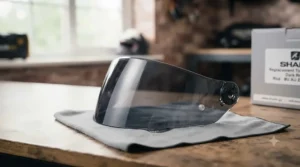
Getting fitment right starts with your helmet’s exact model number, not just the brand name — “Shoei” alone tells a seller nothing useful, but “Shoei X-Spirit III” narrows the CWR-1 family down precisely. Check the small print stamped inside your helmet’s chin bar or on the manufacturer’s fitment chart, since visually similar-looking shells like the HJC RPHA 11 and RPHA 70 share a visor family while others that look almost identical from the outside don’t. According to the UK government’s official guidance on motorcycle helmets and eye protection, any visor worn on the road must meet a recognised British or European standard and carry the equivalent of a BSI Kitemark — a detail worth checking on the product listing before you commit, not after delivery. Once the replacement visor arrives, test the mounting pins align cleanly with your helmet’s pivot mechanism before riding anywhere, since a visor that doesn’t seat fully can create wind noise or, worse, detach at speed. Finally, always fit any accompanying Pinlock insert according to the visor manufacturer’s specific instructions — inserts are rarely fully interchangeable between tint variants even within the same visor family, as several Shoei owners have discovered the hard way with the CWR-1’s dedicated Pinlock mounting points.
Universal Tinted Visor Sizing Explained
Universal-fit visors work on a genuinely different logic to branded shell-specific ones, and understanding that logic prevents a lot of disappointed first fittings. Rather than being moulded to one exact helmet shape, universal tinted visors use a broader curvature and flexible edge profile designed to seat against a range of similarly sized full-face shells, which is why fit quality varies more helmet to helmet than with a dedicated Shoei or AGV replacement. Practically, that means checking three things before ordering: your helmet’s approximate shell size category (small/medium versus large/XL profiles fit differently), whether your helmet uses a standard side-pivot visor mechanism rather than a proprietary quick-release system, and — critically — whether the specific universal visor you’re considering carries a genuine BSI or ECE mark rather than simply “fits most helmets” marketing language. As the Motor Cycles (Eye Protectors) Regulations make clear, the legal requirement applies to the eye protector itself, not to the helmet it’s fitted to, so a universal visor without proper certification is exactly as non-compliant on a budget helmet as it would be on a premium one. If a listing doesn’t clearly state a light-transmission figure or marking standard, treat it as track-only until proven otherwise.
✨ Don’t Miss These Exclusive Deals!
🔍 Take your replacement tinted visor shopping to the next level with these carefully researched picks. Click through on any highlighted model to check current pricing and availability. The right visor here will help you build a genuinely comfortable riding kit you’ll actually reach for on every bright-day ride!
Real-World Scenarios: Which Visor Fits Your Riding
Picture three riders with genuinely different needs. First, the daily commuter riding into low winter sun on an exposed A-road twice a day, who needs a visor that’s legally usable every single morning without a second thought — the AGV K6/K6S Max Vision Light Tint or HJC HJ-26ST Legal Smoke are built exactly for this brief, since both are explicitly marketed as daylight road-legal. Second, the track-day regular who owns a dedicated set of leathers and trailers the bike to circuits most weekends, who genuinely doesn’t need road legality at all and instead wants maximum glare reduction and a striking look for photos — this is where the Shoei CWR-1 Dark Smoke or Bob Heath Dark Tinted Visor make complete sense, provided they never touch a public road in that configuration. Third, the rider with an older or less common helmet brand who just wants a functional tint without spending branded-visor money — the Universal Aftermarket Tinted Visor is the sensible starting point here, with the caveat that verifying the compliance marking is entirely the buyer’s job before that first road ride.
How to Choose a Replacement Tinted Visor
Working through these six checks in order will save you from the most common and most expensive mistakes.
- Identify your exact helmet model first. Brand alone isn’t enough — visor families like the Shoei CWR-1 or HJC HJ-26ST only fit specific named shells.
- Decide road use versus track use honestly. If there’s any chance you’ll ride home in it, only consider visors explicitly marked road-legal.
- Check the light transmission or marking claim. UK law requires at least 50% transmission and a genuine BSI or ECE mark for road use.
- Confirm Pinlock compatibility if you tour. Not every tint variant within a visor family accepts the same Pinlock insert.
- Weigh branded fit precision against universal flexibility. Shell-specific visors seal better; universal options cover helmets branded visors don’t support.
- Budget for a spare clear visor too. A single tinted shield rarely covers every lighting condition you’ll actually ride in.
Common Mistakes When Buying a Replacement Tinted Visor
The single most common mistake is assuming “tinted” automatically means “road legal” — it doesn’t, and the difference between a light smoke and dark smoke finish from the same brand can be the entire difference between a legal daily-rider visor and one that’s track-only. A closely related error is buying based on brand name alone without checking the specific model fitment, which is exactly why the Shoei CWR-1 explicitly lists only three compatible shells rather than “all Shoei helmets.” Universal visor buyers in particular tend to underestimate fit variance, ordering purely on price and being surprised when wind noise or a poor seal shows up on the first motorway ride — always check for genuine buyer photos and fitment notes on the specific helmet model before committing. Riders also frequently forget that a Pinlock insert bought for one tint variant may not physically fit a different tint variant in the same visor family, leading to a returned or unused insert. Finally, several owners report riding into dusk or poor weather still wearing a legitimately road-legal daylight tint, which is technically permitted but genuinely reduces visibility in low light — swapping back to clear as light fades is simply good practice, not just a legal nicety.
Replacement Tinted Visor vs Photochromic Visor
It’s worth understanding how a fixed tinted visor compares with the photochromic alternative that brands like AGV now offer on select models. A fixed tinted visor, whether it’s the HJC HJ-26ST Legal Smoke or the Nolan N87 NFS-06 Light Smoke, delivers one consistent tint level regardless of light conditions — simple, predictable, and typically cheaper. A photochromic visor, like AGV’s SP1 option for the K6-S, automatically darkens in bright light and lightens again as conditions dim, reaching up to roughly 80% tint intensity in direct sun before easing back off. The trade-off is straightforward: photochromic technology costs meaningfully more and adds a small amount of lag as the lens adjusts, but it removes the need to carry or swap a second visor entirely, which matters for riders whose daily route genuinely swings between bright motorway stretches and shaded urban streets. For most budget-conscious buyers, a fixed light or legal-smoke tint paired with a spare clear visor delivers similar practical flexibility for considerably less outlay.
Is Your Tinted Visor Road Legal? UK Rules Explained
UK law is genuinely specific here, even if it doesn’t always feel that way browsing visor listings. Under the requirements confirmed on the government’s motorcycle helmet law page, any visor or goggle worn on a public road must meet British Standard BS4110 or an equivalent European standard offering the same level of protection, and carry a mark equivalent to the BSI Kitemark. Independent of the standard itself, the practical rule cited consistently across UK retailers and specialist visor brands is that light transmission must sit at or above 50% — dark smoke, most mirrored, and most iridium finishes fall below that line and are sold explicitly labelled “not legal for road use.” Riders caught using a non-compliant visor in conditions of reduced visibility can be stopped and tested using specialist light-transmission equipment, and while enforcement in bright daylight tends to be pragmatic, riding a dark tint at dusk or in poor weather carries genuine legal exposure. The safest practical approach: keep any dark or unmarked tinted visor strictly for track days or private land, and only fit visors explicitly labelled for daylight road use — like the AGV K6/K6S Max Vision Light Tint or HJC HJ-26ST Legal Smoke — for anything you’ll actually ride home in.
Long-Term Care & Maintenance for Tinted Visors
A tinted visor’s anti-scratch coating is the first thing to degrade with regular use, and cleaning technique matters more than most riders assume — a soft microfibre cloth and lukewarm water lift road grime without grinding grit into the coating, while dry-wiping a dusty visor is one of the fastest ways to etch fine scratches that scatter light and worsen glare precisely when you need the tint working hardest. Storage matters too: leaving a tinted visor in direct sun on a parked bike for hours, day after day, accelerates the slow yellowing some polycarbonate tints develop over several seasons, so a helmet bag or simply parking in shade where possible genuinely extends visor life. For visors with a separate Pinlock insert, keep the insert itself away from harsh cleaning chemicals entirely — the anti-fog coating is delicate and easily stripped by anything beyond water and a gentle wipe. As independent motorcycling publications covering UK visor legality and maintenance have noted, even a clean, high-quality clear visor reduces light transmission somewhat over its lifetime, so periodically checking an ageing tinted visor against its original clarity is a sensible habit, not paranoia — replace it once scratching or yellowing genuinely starts affecting how well you can see.
Frequently Asked Questions
❓ Are dark tinted visors legal to ride with in the UK?
❓ Will a universal tinted visor fit any full-face helmet?
❓ Can I use the same Pinlock insert across different tint variants?
❓ What's the difference between light smoke and dark smoke tints?
❓ Do I still need a clear visor if I buy a tinted one?
Conclusion
The honest verdict on replacement tinted visors in 2026 is that tint darkness and everyday usability sit at opposite ends of the same scale, and no amount of clever marketing changes that trade-off. For daily commuters who need genuine road legality every morning, the AGV K6/K6S Max Vision Light Tint and HJC HJ-26ST Legal Smoke are the clearest, most dependable picks. Touring riders covering long, variable-light days will likely prefer the Nolan N87 NFS-06 Light Smoke, while budget-conscious Caberg owners can get solid value from the Duke II/EVO Tinted Visor, provided they confirm the exact tint’s marking first. Track-day riders and photographers have genuinely excellent options in the Shoei CWR-1 Dark Smoke and Bob Heath Dark Tinted Visor, precisely because those visors were never designed to touch a public road in the first place. And for anyone with a helmet the big brands don’t support, the Universal Aftermarket Tinted Visor remains the practical fallback — as long as you personally verify the compliance marking before you ride. Whichever you choose, the 50% legal transmission line isn’t a suggestion, and getting fitment right the first time saves both money and a wasted trip back to the post box.
Recommended for You
- Mirror Tinted Visor for Motorbike Helmet: 7 Best Picks (2026)
- Smoke Tinted Visor for Daytime Riding: 7 Best Picks 2026
- Clear Visor For Night Riding: 7 Top Picks That Cut Glare in 2026
Disclaimer: This article contains affiliate links. As an Amazon Associate, I earn from qualifying purchases. If you purchase products through these links, we may earn a small commission at no additional cost to you.
✨ Found this helpful? Share it with your friends! 💬🤗
